
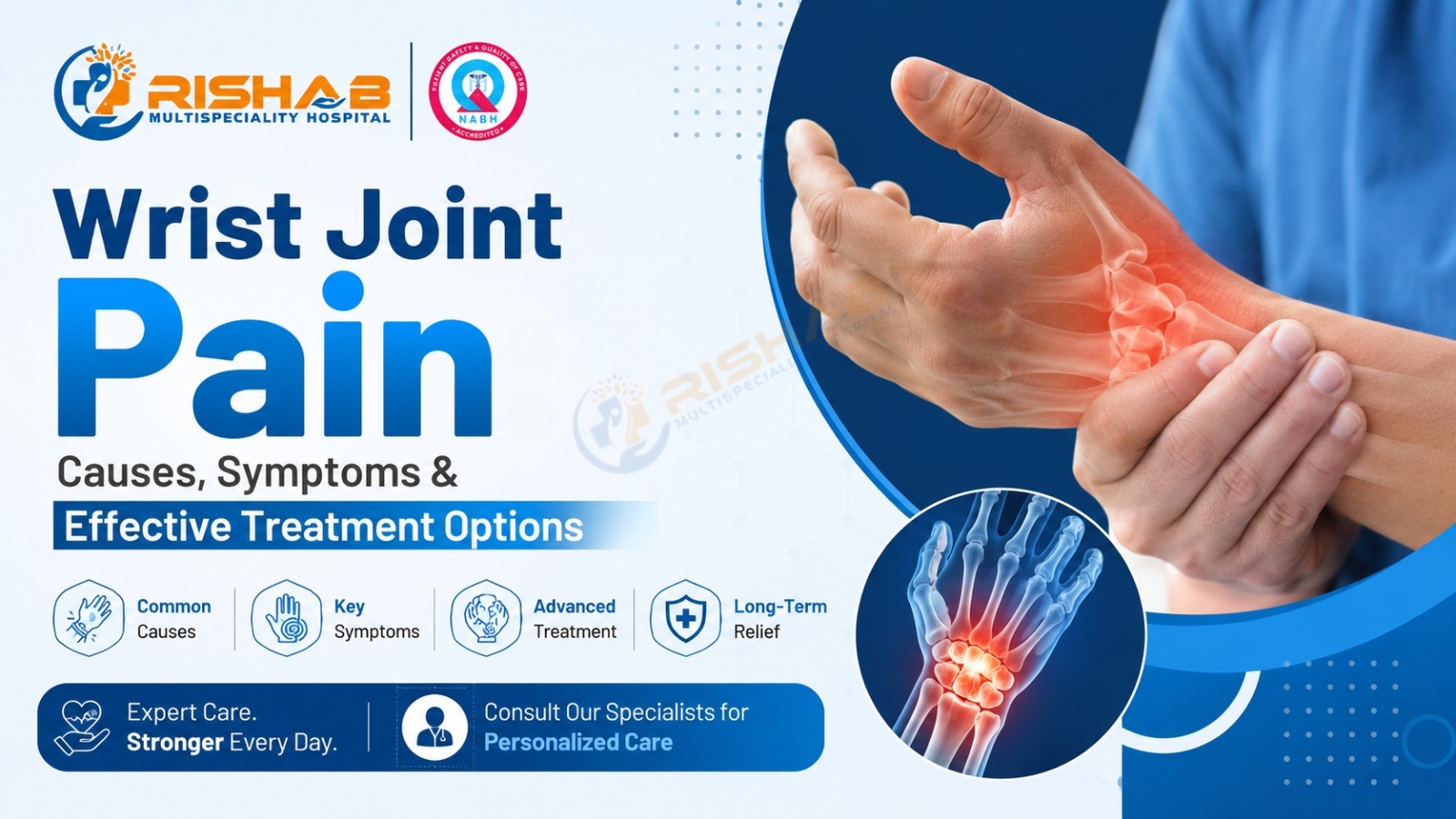
Wrist Joint Pain is a variety of complications that can affect many different people at many different ages. This can be caused by many things including: spending long hours on the computer typing, playing sports, lifting heavy objects, or even just getting older. In any case, pain in the wrist can prevent you from performing some of the daily things you would normally do such as writing, driving, cooking, or even simply holding a cup.
Most people tend to ignore mild wrist discomfort because they think it will heal on its own but this is not the case because if there is persistent wrist pain, swelling and/or it is difficult to move the wrist joint then there could be something wrong with the wrist joint and medical attention will then be necessary.
Wrist Joint Pain is the pain/discomfort/stiffness and/or inflammation of the wrist joint, which is where the 2 bones in your forearm meet the bones in your hand or wrist, it is commonly evaluated at the Best orthopedic hospital in Jaipur. The wrist joint is made of many bones, ligaments, tendons, muscles, nerves and cartilage that all work in combination together to create the flexibility and movement of the wrist joint.
Wrist joint pain can develop immediately (from an injury) or gradually over time (from RSD or other medical conditions) and the level of pain associated with this condition will depend upon the cause of the pain. The severity of the pain can be mild to moderate to severe depending on whether it is occurring in one or both wrists.
Many factors can cause wrist pain, such as injuries, overuse and other illnesses. There are numerous reasons for painful wrists ranging from trauma to reapeted use to underlying illness.
1. Sprains and Strains: Sprains and strains result from stretching or tearing the ligaments of the wrist either from falling, being injured in sports or twisting an area suddenly.
2. Fractures: A fracture of the wrist is among the most frequent type of injury that results from falling on your outstretched arm and typically causes intense pain, swelling and difficulty in using the wrist.
3. Repetitive Stress Injuries: Repetitive use of the hand/wrist will overload the muscles and tendons causing injury over time. Examples of repetive use you might encounter: typing, writing, using a tool, or playing an instrument.
4. Carpal Tunnel Syndrome: Carpal tunnel syndrome is a condition that occurs when there is pressure applied to the median nerve at the wrist which leads to wrist pain and symptoms such as numbness, tingling or weakness in your fingers/hands.
5. Arthritis: Arthritus is a form of inflammation to the joints in the wrist. There are different forms of arthritis that can affect the wrist including Rheumatoid and Osteoarthritis. Symptoms of both involve pain, swelling, decreased range of motion in the affected joint.
6. Tendonitis: In most cases, tendonitis will develop as a result of repetive wrist motion through either sports or work.
7. Ganglion Cysts: Ganglion cysts are fluid filled lumps that develop, most often, on or around the wrist joint and can be painful and/or limit movement of the wrist.
8. Gout and other inflammatory disorders: Certain metabolic diseases or autoimmune disorders can cause rapid onset of wrist swelling and pain.
You Can Read Also:- What Are the First Signs of Chickenpox? Symptoms, Causes, Treatment & Prevention
Recognising wrist joint symptom early can help stop complications from happening. Other symptoms can indicate a far more serious problem that would need immediate medical attention.
Symptoms associated with wrist joint issues include:
When you see your doctor, they will ask about your symptoms, medical history, job duties, and any sporting activities you participate in as well as recent injuries. Then they will do a number of diagnostic tests to help determine whether or not you have an injury. The tests may include:
A physical exam
If you have wrist-related problems, refer to your orthopedist for additional information.
Here are some indicators of when to go for an orthopedic consult for your wrist problem:
Treatment for wrist pain will depend on many factors such as reason and severity of the injury.
1. Rest and Change in Activity
Avoid any activity that could cause further pain, and be sure to give enough time for the wrist to heal.
2. Ice Therapy
For the first 48 hours after getting hurt, it is important to use an ice pak for 15-20 minutes multiple times each day to reduce pain and swelling.
3. Brace/Splint
Wearing a brace or splint will help stabilize the wrist and stop excessive movement during the healing process.
4. Medication
Your doctor may suggest using medications to relieve pain and reduce inflammation.
5. Physical Therapy
Physical therapy can help you improve flexibility, strength and range of motion following an injury.
6. Exercises for Wrist Pain
After the immediate pain has subsided, performing gentle wrist exercises can increase the strength of the joint and help regain mobility.
Some good exercises are:
Regardless, anytime you begin a new exercise, it is vital that you consult with a health care professional if you have had any prior pain.
7. Surgery
Only when the other ways to treat the injury have not worked, or you have a fracture, severe ligament injury, or severe carpal tunnel syndrome, a physician will do surgery to repair those problems.
You Can Read Also:- Blood Clot in Brain Survival Rate: What You Need to Know
There are many instances where you can lessen your chances of having an injury by maintaining the following good habit:
Wrist Joint Pain should always be treated seriously if it is impacting your daily life, and/or does not improve with home care and is continuing to persist. Treating wrist pain early will be beneficial to both the relief of pain and the return of function to the wrist as well as reducing the risk of long-term joint damage. Treatment for wrist pain may include injuries, arthritis, repetitive stress, or nerve compression; therefore, treatment tailored to the individual is the best opportunity for recovery.
At Rishab Hospital Jaipur, the experienced Orthopedic Department offers complete diagnosis as well as advanced treatment options for wrist injuries, arthritis, tendon disorders, fractures, and other joint pathologies.
The orthopedic specialists at Rishab Hospital Jaipur are dedicated to restoring as much strength, mobility, and a pain-free lifestyle as possible, utilizing all available resources such as modern diagnostic tools, physiotherapy services, and personalized rehabilitation plans. If you are suffering from persistent wrist pain or decreased function of the hand, contact the orthopedic professionals at Rishab Hospital Jaipur for prompt, reliable treatment.
Q.1 Is wrist pain an indicator that you may have fractured your wrist?
Ans. Wrist pain is generally NOT an indicator of a fracture, as there are other reasons for wrist pain, including; muscle strains, tendonitis, arthritic changes, nerve compression (impingement), and repetitive strains. Any significant wrist injury that is accompanied by pain should be evaluated to rule out a fracture.
Q.2 Will wrist pain heal without any treatment?
Ans. Wrist sprains and overuse injuries will usually heal with rest, ice, and/or changing your activities. If your pain does not improve, or worsens, you should see a physician.
Q.3 Is it possible to exercise with wrist pain?
Ans. Low intensity exercises that do not increase pain in the wrist can be beneficial to your wrist recovery. Exercising with moderate to greater pain may aggravate the injury. You should seek advice from your physician before beginning an exercise program.
Q.4 Can wrist pain radiate into my fingers/arm?
Ans. Yes. There are many conditions causes pain that can radiate into your fingers/arm (i.e., carpal tunnel syndrome, impingement of a nerve, chronic tendonitis).
Q.5 Are wrist supports/braces safe to use long term?
Ans. A wrist brace can support the healing of the wrist in the short term, but wearing it for a long-term period without medical direction may cause weakness of the muscles that support the wrist. Your doctor can tell you how long you will be required to wear a brace or support based on your individual needs.


At Rishab Multispeciality Hospital, our primary focus is on delivering unparalleled multidisciplinary care to our patients. We are committed to leveraging state-of-the-art technology and harnessing expertise to ensure the highest standards of healthcare.
Rishab Hospital Choraha, Vishwa Vidhyalaya Nagar, Jagatpura, Jaipur, Rajasthan 302017
 0141 3513400
