
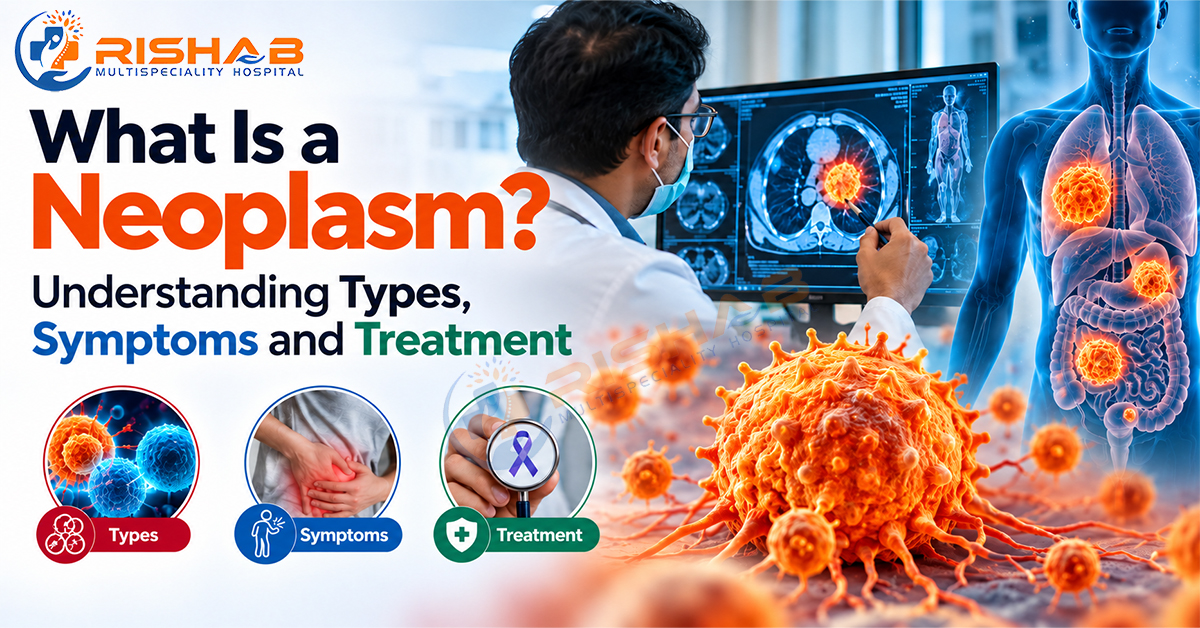
An abnormal mass or growth of cells known as a neoplasm develops when cells start to mutate and grow either in an unusual or uncontrolled way. A neoplasm can either be benign or malignant. While some neoplasms can remain non-harmful, some of them may also invade nearby tissues.
Knowledge regarding neoplasm types, symptoms, reasons, diagnosis, and treatment, will help one become aware of the occurrences leading to serious issues and getting help when needed.
A neoplasm refers to a tumor or mass that has resulted from abnormal growth of cells. It arises when cells keep reproducing in a situation where such growth is not called for.
There are two types of neoplasms:
Healthy cells grow, divide, and die in a regulated manner. A cancer may arise if genetic mutations disrupt normal cellular control. Then, abnormal cells proliferate to form a tumor. The Oncology Department specializes in the diagnosis and treatment of cancer and related neoplasms.
The mutations can be due to hereditary factors, environmental influences, lifestyle habits, or random changes that happen as cells divide. The exact process depends on the type and location of the neoplasm.
There are two major types of neoplasms based on the tissue of origin and the behavior of the neoplasms.
1. Benign Neoplasms
Benign neoplasms are considered non-cancerous. They are characterized by slow growth and limited growth. Some examples of benign neoplasms are certain types of lipomas, some fibroids and some adenomas.
Even though benign neoplasms are not harmful, they can pose danger if they grow to such size that they compress adjacent organs, nerves or blood vessels.
2. Malignant neoplasms
Malignant neoplasms are cancerous so they invade the neighboring tissues. Malignant neoplasms spread throughout the body with the bloodstream or the lymphatic system. The particular treatment plan is selected according to the type, stage, location and other features of the cancer.
3. Potentially malignant neoplasms
There are some abnormal cellular growths which potentially can become malignant. Doctors can recommend further observation, removal of the growth or conducting additional tests depending on the particular situation.
You Can Also Read: Vitamin D Deficiency: Symptoms, Causes, Treatment and Prevention
The primary distinction is in their behavior. Benign tumors usually stay in one place while malignant tumors can spread and invade adjacent tissue.
Nevertheless, the appearance alone may not be enough to confirm if a tumor is malignant. Laboratory tests, imaging, and sometimes biopsy are usually needed to diagnose the disease properly.
Symptoms differ widely based on where the tumor arises, size, and whether it affects nearby tissues or organs.
The most common symptoms are:
Sometimes neoplasms do not have symptoms, especially while they are small. Therefore, any significant change should be examined by a doctor to rule out cancer.
There is no one main cause of neoplasms, as they can arise due to alterations within genes responsible for cell growth and division.
Some possible contributing factors of developing neoplasms might include the following:
However, having risk factors does not necessarily mean that a person will get a neoplasm.
Usually, the detection of neoplasms starts with a medical history and a physical examination. Afterward, the doctor may order other tests based on the suspected location of the neoplasm and its type.
Imaging methods (ultrasound, X-ray scan, CT or MRI scan) or blood tests may be used in case needed to support the diagnosis of neoplasia.
In some other cases, a biopsy will be needed so that the cells and tissues can be examined under a microscope.
You Can Also Read: Loose Motion: Causes, Symptoms, Treatment & Home Remedies
Treatment of tumor will vary based on a number of factors, for example, whether it is benign or malignant, its location, size and stage as well as the overall condition of the patient.
Treatment options include:
Neoplasms cannot be prevented in every instance as some genetic modifications occur spontaneously or may result from genes passed down through generations. However, reducing certain risks may lower an individual's chances of getting some cancers.
Some ways to prevent cancer include not smoking, drinking less alcohol, keeping fit, being active, protecting the skin against harmful ultraviolet rays, and adhering to the recommended test procedures.
Consult a doctor when you see a lump that cannot be explained, feel constant pain, experience unusual bleeding, suffer sudden weight loss, or notice a change in bowel or bladder habits.
Knowing when to turn to a physician does not imply that the growth in question is cancerous.
A neoplasm refers to a non-normal cell growth that might either turn out to be benign or malignant and not all neoplasms should necessarily be labelled as cancerous. Identification of strange signs and symptoms accompanied by timely evaluation can assist in establishing what kind of growth is developing and potential treatment options.
Here at Rishab Hospital Jaipur, patients are offered diagnostic services, examination and consultation on various conditions involving neoplasms and tumors. Hospital’s team of doctors and their diagnostics units will be able to assist in identifying the neoplasm and in creating an individual treatment plan for the patient. If you observe an unusual lump, or the occurrence of any strange symptoms, please refer a doctor for a thorough check-up.
Q 1. What exactly is a neoplasm?
Ans. Neoplasm refers to a type of abnormal growth of tissues which is involuntary cell division.
Q 2. What is the distinction between types of neoplasms?
Ans. Neoplasms can be grouped into the following types: benign neoplasms, malignant neoplasms and other abnormal tissues.
Q 3. What's the key distinction between benign and malignant neoplasm?
Ans. In a benign neoplasm, the growth does not spread to other body organs; whereas malignant neoplasm is known to be cancerous and has a tendency to invade tissues.
Q 4. What symptoms represent the presence of neoplasm?
Ans. The symptoms of neoplasm vary according to its location. Typical symptoms include a lump and swelling in the body, unexplained weight loss, constant pain, abnormal bleeding, fatigue etc.
Q 5. How is a neoplasm diagnosed and treated?
Ans. A diagnosis commonly takes place after a physical examination or imaging techniques. The treatment for neoplasm may include surgery, chemotherapy, radiotherapy or even waiting for it to develop.


At Rishab Multispeciality Hospital, our primary focus is on delivering unparalleled multidisciplinary care to our patients. We are committed to leveraging state-of-the-art technology and harnessing expertise to ensure the highest standards of healthcare.
Rishab Hospital Choraha, Vishwa Vidhyalaya Nagar, Jagatpura, Jaipur, Rajasthan 302017
 0141 3513400
