
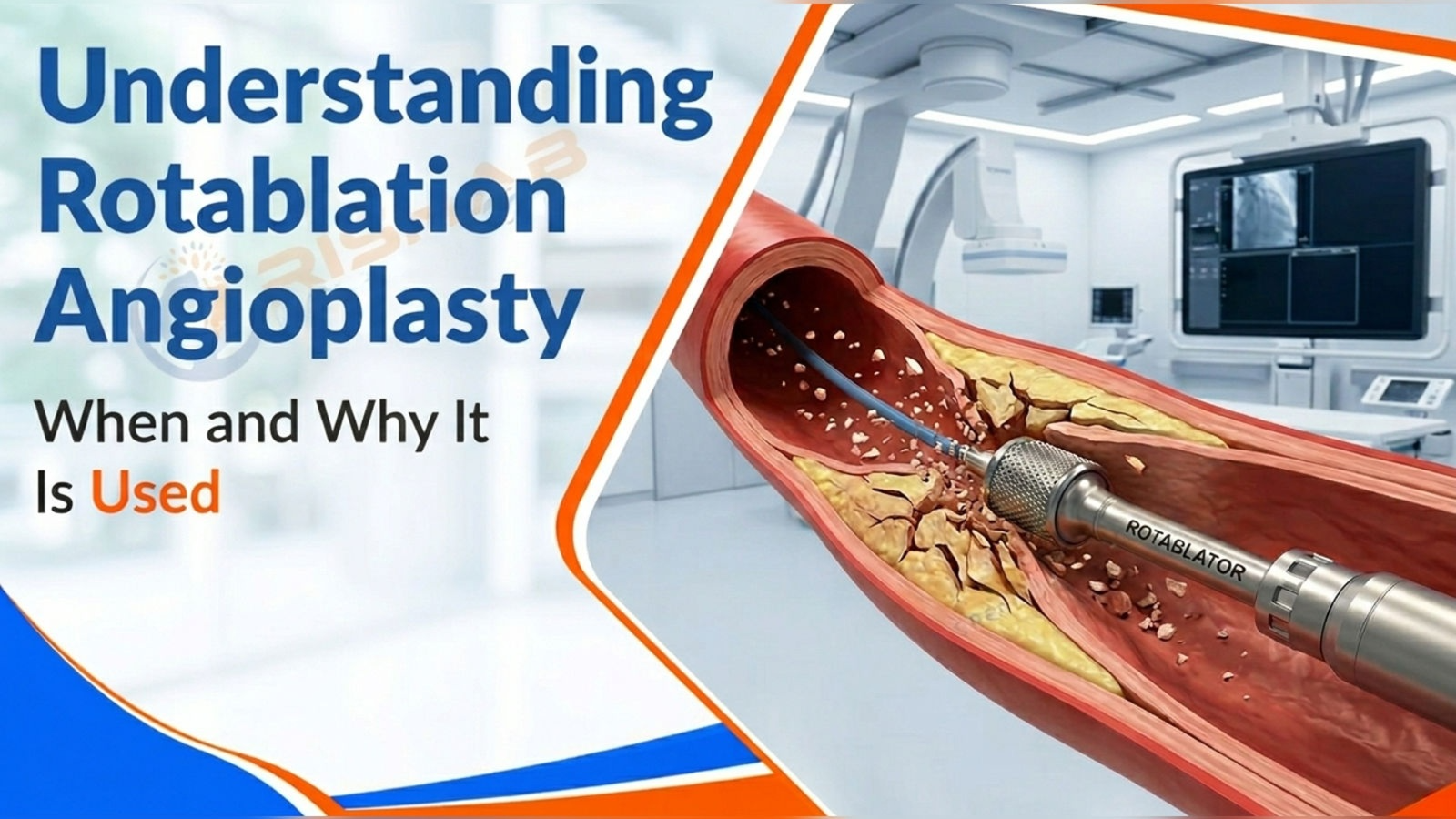
Rotablation is one type of invasive heart procedure used to open totally blocked coronary arteries due to calcified plaque buildup. For most heart patients, standard angioplasty using a balloon and stenting work effectively for treating blocked arteries. However, in patients with heavily calcified coronary arteries, the arteries are so rigid that they do not respond well to traditional angioplasty techniques.
This is where rotational atherectomy (also commonly referred to as rotablation) plays an important role. Using a small, rotating device that spins at high speeds (called the rotablation catheter), this technique allows the physician to "drill" through the plaque material, enabling the placement of a stent.
If you have been wondering what rotablative angioplasty is, when you need it, and how does it work for heart patients, the answers are explained in this post using simple language.
Before we can understand the role of rotational atherectomy in treating coronary artery disease (CAD), we first need to look at what this form of CAD is trying to fix.
Coronary artery disease develops when atherosclerotic plaque builds up in the arteries that supply blood to your heart. Over time, and especially in older adults, diabetics, or those who have chronic hypertension, the plaque hardens with deposits of calcium; this is called coronary artery calcification.
There are several things that are known contributors to hard or calcified arteries:
When the artery has large amounts of calcium, it loses its ability to be elastic. This makes it very difficult for physicians at the Best Cradiology Hospital to use balloons to dilate the artery during a routine angioplasty procedure. If simply placing a stent in an artery that has a lot of calcification is unsuccessful, there is an increased possibility of complications.
Why Not Regular Angioplasty?
Standard angioplasty, also referred to as balloon angioplasty, is completed by using a balloon to expand the artery enough to allow for the placement of a stent. When the blockage is very hard, problems may occur as a result of the following:
At this point, rotablation treatment would be valuable.
What is Rotational Atherectomy, and How Does it Work?
Rotational atherectomy is performed with the use of a diamond-tipped burr that is attached to a rotablation catheter that spins at a high rate of speed and gently grinds down the calcified plaque into very small pieces. The pieces produced by this process are small enough to safely pass through the bloodstream.
Once the calcified blockage has been modified, the physician will be able to do the following:
1. Properly expand the artery;
2. Safely implant and deploy the stent;
3. Increase the likelihood of success for the long-term result of this procedure.
When Do Physicians Recommend Rotablation?
Typically, physicians will recommend rotablation angioplasty when:
Rotablation is an option only for patients with hard, calcified lesions, where conventional treatments are not successful. It is not intended to be used for all heart patients.
You Can Read Also:- Upper Back Pain at Work: Symptoms, Causes, and Treatment
The term rotablation angioplasty pertains to a larger group of procedures known as atherectomy procedures, with one of the more common methods for treating calcified coronary arteries being rotational atherectomy.
Who Qualifies as an Ideal Candidate for Rotablation?
You may meet criteria for a rotablation procedure if:
Your physician will use either intravascular ultrasound (IVUS) or optical coherence tomography (OCT) to evaluate whether or not there is excessive calcification present prior to determining whether you would be a good candidate for this procedure.
Patients often wonder whether rotablation counts as surgery.
It’s not. It's a type of minimally-invasive, catheter-based procedure like routine angioplasty.
How the Rotablator Works
Step 1 - Access: A catheter is inserted into the artery through the wrist or groin.
Step 2 - Place the wire: A thin wire is passed into the blocked coronary artery.
Step 3 - The Rotablator: A diamond-tipped burr spins at very high speed to remove calcified plaque.
Step 4 - Balloon Angioplasty: Once the plaque has been modified, we inflate a balloon
Step 5 - Stenting: A stent is then placed to keep the artery open.
The whole procedure is performed under local anesthesia with patients alert but comfortable.
Recovery after rotablation angioplasty is very much like recovery after a standard angioplasty. Most patients are in the hospital for 1-2 days; and light activity can be resumed in as little as a few days. Patients can expect to be fully recovered within 1 week.
Use rotablation angioplasty for the following reasons:
As with any cardiac procedure, there are risks associated with rotablation treatment, including:
That said, when performed by an experienced interventionalist, rotablation is a very safe and highly effective procedure.
You Can Read Also:- Throat Infection: Causes, Symptoms, Diagnosis, and Treatment Guide
Many studies have shown rotablator angioplasty performs very well for patients with complex calcified lesions. An experienced cardiologist performing rotablator angioplasty can produce better results with challenging cases than traditional angioplasty alone would.
However, you should be aware that rotablator angioplasty will not provide a permanent solution for coronary artery disease. Lifestyle changes, medications, and follow-up appointments with your physician will continue to be very important.
Severely calcified coronary arteries make it very difficult—and at times impossible—for traditional angioplasty procedures to work successfully. In these complex cases, Rotablation Angioplasty is a safe advanced approach to modifying tough plaque, allowing placement of stents.
Anyone considering this procedure—or has been recommended—is encouraged to learn more about how the Rotablator works. Knowledge regarding what to expect during the procedure helps alleviate anxiety, as well as being an aide in making well-informed choices.
Also, early recognition of problems, timely intervention and care by highly skilled cardiologists improve overall heart health outcomes. At Rishabh Hospital Jaipur, we offer patients state-of-the-art cardiac treatment with compassion while utilizing modern technology and individualized services aimed at restoring blood flow to the body so that our patients can participate fully in a normal, active lifestyle.
1. How Painful Is Rotablator Angioplasty?
The procedure is done with local anesthetic and you may experience mild pressure, but it should not be a painful procedure for you.
2. What Is The Difference Between Rotablator Angioplasty Vs A Traditional Angioplasty?
A traditional angioplasty employs the use of a balloon to open an artery that has become narrowed, while rotablator angioplasty will grind away the hard calcium deposits from the artery prior to placing a balloon and stent in the artery.
3. Is Rotablator Angioplasty Safe For Elderly Patients?
Certainly! In fact, elderly patients typically have more calcified arteries than their younger counterparts. However; a physician will evaluate the patient's overall health prior to recommending rotablator angioplasty as a treatment option.


At Rishab Multispeciality Hospital, our primary focus is on delivering unparalleled multidisciplinary care to our patients. We are committed to leveraging state-of-the-art technology and harnessing expertise to ensure the highest standards of healthcare.
Rishab Hospital Choraha, Vishwa Vidhyalaya Nagar, Jagatpura, Jaipur, Rajasthan 302017
 0141 3513400
